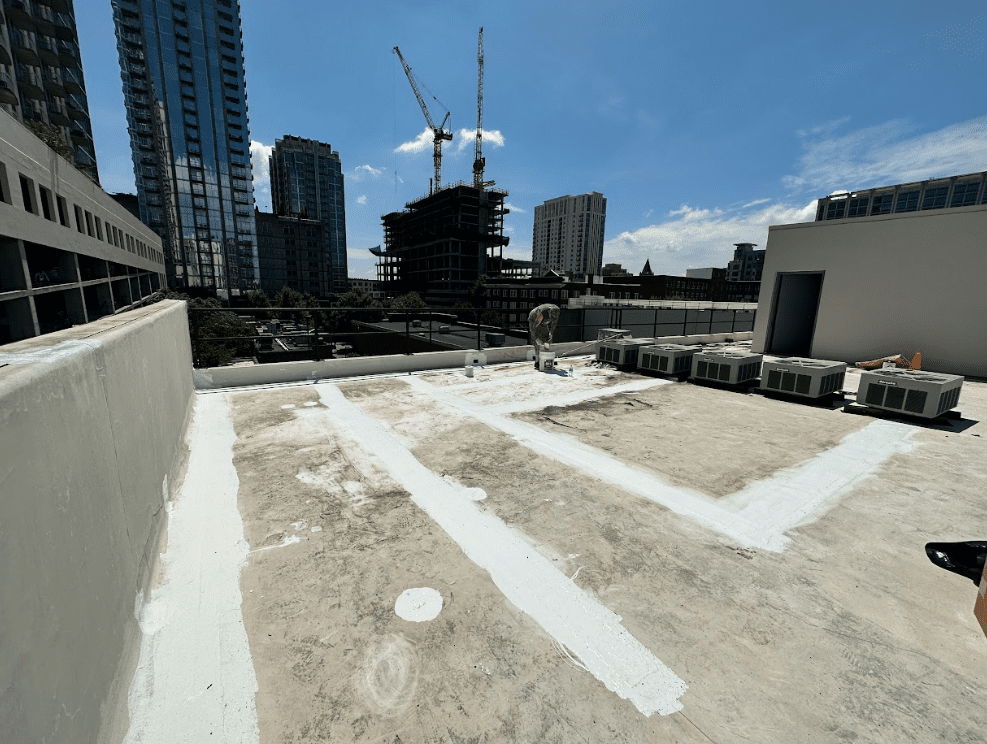
A single ply roof membrane system can use TPO, PVC, or EPDM, and the best choice depends on the building and what you need from the roof. TPO is often a good fit for Sugar Hill, GA, commercial properties that want a reflective roof at a reasonable cost. PVC costs more but offers strong resistance to grease and chemicals, while EPDM is a durable rubber membrane with a long track record on low-slope roofs. There is no single material that is right for every building.
For commercial property owners in Sugar Hill and the surrounding North Georgia area, weather also deserves a place in the decision. Hot summers, strong sun, thunderstorms, humidity, and periods of heavy rain can all affect a low-slope roof. The membrane needs to fit both the building and the conditions it faces throughout the year.
Single-ply roofing uses large, flexible sheets of synthetic material to create a waterproof layer over a commercial or low-slope roof. Rather than building the roof from several layers of asphalt and reinforcing material, the membrane itself provides the main waterproof barrier.
The membrane is installed over insulation and the roof deck. Depending on the roofing system and building, it may be mechanically attached, fully adhered, or, in some cases, ballasted.
TPO, PVC, and EPDM are the three materials commercial property owners are most likely to encounter. Although they serve the same basic purpose, they are not interchangeable.
TPO and PVC are thermoplastic materials. Their seams can be welded together using hot air, creating a continuous connection between sheets. EPDM is a synthetic rubber and typically relies on seam tape or adhesive at its seams.
Those differences affect installation, maintenance, cost, and where each material tends to perform best.
TPO stands for thermoplastic polyolefin. It is commonly used on warehouses, offices, retail buildings, schools, and other commercial properties with flat or low-slope roofs.
One reason TPO is so recognizable is its color. White TPO roofs are common because the light surface reflects more sunlight than a traditional dark roof.
That can be useful during a Sugar Hill summer when commercial roofs are exposed to hours of direct sunlight.
TPO falls into a useful middle ground for many projects. It provides heat-welded seams and a reflective surface without typically carrying the higher initial price associated with PVC.
Depending on the particular product and installation, TPO can provide:
TPO can make sense for a commercial building that does not face unusual chemical or grease exposure but still needs a dependable low-slope roofing material.
Sugar Hill's summers bring heat, humidity, and plenty of sunshine. A white TPO roof can help limit how much solar heat the roofing surface absorbs.
That does not mean installing TPO will automatically result in a dramatic drop in an electric bill. Roof insulation, HVAC equipment, windows, air leakage, building size, and daily operations all affect energy use. The reflective surface is simply one factor.
TPO can be especially practical for large commercial roofs where balancing initial cost and long-term performance is important.
PVC stands for polyvinyl chloride. Like TPO, it is a thermoplastic membrane and commonly comes in light, reflective colors.
The seams are heat-welded, which creates strong connections between membrane sheets. But the biggest reason a building owner might choose PVC over TPO is usually not the seam construction or color.
It is chemical resistance.
Commercial kitchens can release grease through rooftop exhaust systems. Manufacturing and industrial operations may expose roofing materials to oils, chemicals, and other substances.
PVC is known for handling these conditions particularly well.
For that reason, it is frequently considered for:
Consider a Sugar Hill restaurant with kitchen exhaust equipment located on the roof. Grease collecting around the exhaust area may create conditions that are harder on certain roofing materials. In a situation like this, paying more for PVC may make sense.
An office or standard warehouse without those exposures may not need that additional level of protection.
PVC roofing is generally one of the more expensive choices among these three membranes. Whether the additional expense is worthwhile comes back to how the building is used.
Choosing the least expensive material does not necessarily save money if it is poorly suited to the conditions on the roof. On the other hand, there is little reason to pay for specialized performance a building does not need.
EPDM stands for ethylene propylene diene monomer. It is a synthetic rubber roofing membrane that has been used on commercial buildings for decades.
Traditional EPDM is black, although other options are available. Its rubber-like composition makes it flexible, including when temperatures change.
EPDM roofing is noticeably different from TPO and PVC in both appearance and installation.
EPDM is not a new roofing product trying to establish a track record. Commercial roofers have worked with it for decades, so its strengths and maintenance requirements are well understood.
Reasons building owners may consider EPDM include:
Its flexibility can be helpful as roofing materials expand and contract with temperature changes.
TPO and PVC seams are generally heat-welded. EPDM seams typically rely on specialized tapes or adhesives.
That makes proper preparation especially important. The surfaces need to be clean, dry, and installed according to the roofing manufacturer's requirements.
Older or damaged seams are also areas that should receive attention during routine roof inspections. If a seam begins to separate, water may find its way beneath the membrane.
Put all three materials side by side and there is no universal winner. For many standard commercial buildings, TPO roofing offers an appealing mix of cost, reflectivity, and durability.
For restaurants or facilities where the roof encounters grease or chemicals, PVC roofing may justify its higher price. For owners looking for a flexible rubber membrane with decades of commercial use behind it, EPDM roofing remains worth considering.
The roof's condition matters just as much as the material. A building with poor drainage, wet insulation, or damaged decking needs those problems addressed as part of the roofing project.
Sugar Hill sits in Gwinnett County, where a commercial roof can experience very different conditions throughout the year.
Summer heat can make roof surfaces extremely hot, while thunderstorms can bring heavy rain and strong winds. Temperatures also drop during winter, forcing roofing materials to adjust as conditions change.
Commercial roofs often receive direct sunlight for most of the day.
White TPO and PVC surfaces are popular in warm climates because they reflect more solar energy than dark roofing materials. That can help keep the roofing surface cooler.
Traditional black EPDM absorbs more solar heat. Whether that is a major drawback depends on the building's insulation, cooling needs, and overall roof design.
Rain is another concern for low-slope roofs. The membrane needs to keep water out, but the drainage system also has to move that water off the roof. If drains or scuppers become clogged, water can collect in low areas.
Standing water can expose weaknesses that might otherwise go unnoticed, particularly around seams, flashing, penetrations, and previous repairs.
No membrane can compensate for a badly designed or neglected drainage system.
Strong storms can send branches and debris onto commercial roofs. HVAC work, sign maintenance, and other rooftop activity can also puncture a membrane.
This is why durability should not be judged solely by how well a commercial roof material handles rain or sunlight. Consider what actually happens on the roof.
A building with several rooftop HVAC units that are serviced frequently may benefit from designated walkways to protect the membrane from repeated foot traffic.
There are several ways to secure a commercial membrane roof.
A mechanically attached roof uses fasteners to secure the roofing system to the structure below. It is a common installation method for large commercial roofs.
The exact fastening pattern depends on factors such as the roof assembly, building design, and wind requirements.
A fully adhered membrane is bonded to the material beneath it with an approved adhesive.
This creates a smooth roofing surface and may be appropriate for buildings where wind performance, roof shape, or other design factors make full adhesion a good choice.
Some membrane systems, particularly certain EPDM roofs, can use ballast such as stone or pavers to hold the membrane in place.
Ballast is heavy, so the building must be able to support the added weight. It is not an option that should be chosen without considering the structure underneath the roof.
Cost matters on any commercial roofing project, but comparing only the initial estimates can be misleading.
The final price of a roof can change based on:
A large, open warehouse roof will usually be a different project from a smaller restaurant roof crowded with vents, exhaust fans, HVAC equipment, and other penetrations.
The lowest installation price also does not always equal the lowest long-term cost. Repairs, maintenance, energy use, expected service life, and the disruption caused by future leaks deserve consideration.
Whether you choose TPO, PVC, or EPDM, plan on inspecting and maintaining the roof.
Commercial roofs can develop small problems without obvious signs inside the building. A puncture near an HVAC unit or a loose section of flashing may allow moisture into the roofing assembly well before water begins dripping from the ceiling.
Routine inspections can look for issues such as punctures, damaged seams, loose flashing, clogged drains, standing water, deteriorated sealants, and damage around rooftop equipment.
Inspections are also smart after major storms or after other contractors have spent time on the roof.
Keep records of repairs and inspections as well. If the same area repeatedly develops problems, that history can help determine whether another repair is worthwhile or a larger roofing project should be considered.
For many Sugar Hill commercial properties, the decision comes down to what the building needs rather than which material sounds best on paper.
TPO can be a good fit when reflectivity, durability, and budget are all priorities. PVC is often worth considering when grease or chemical exposure is part of the building's daily operations. EPDM remains a dependable option for owners who value flexibility and a roofing material with a long commercial history.
Before choosing, have the entire roof evaluated. The condition of the deck, insulation, drainage system, flashing, penetrations, and existing roofing material can change which option makes the most sense.
A commercial roof is an assembly, not simply a sheet of membrane. Choosing the right material is important, but installing it over a sound, properly designed roof is what gives it the chance to perform for years.
If your commercial roof is leaking, aging, or approaching replacement, Adams & Sons Roofing can help you determine which roofing option fits your property. Contact Adams & Sons Roofing to schedule a commercial roof evaluation in Sugar Hill, GA, and discuss the right membrane, installation method, and roofing plan for your building.