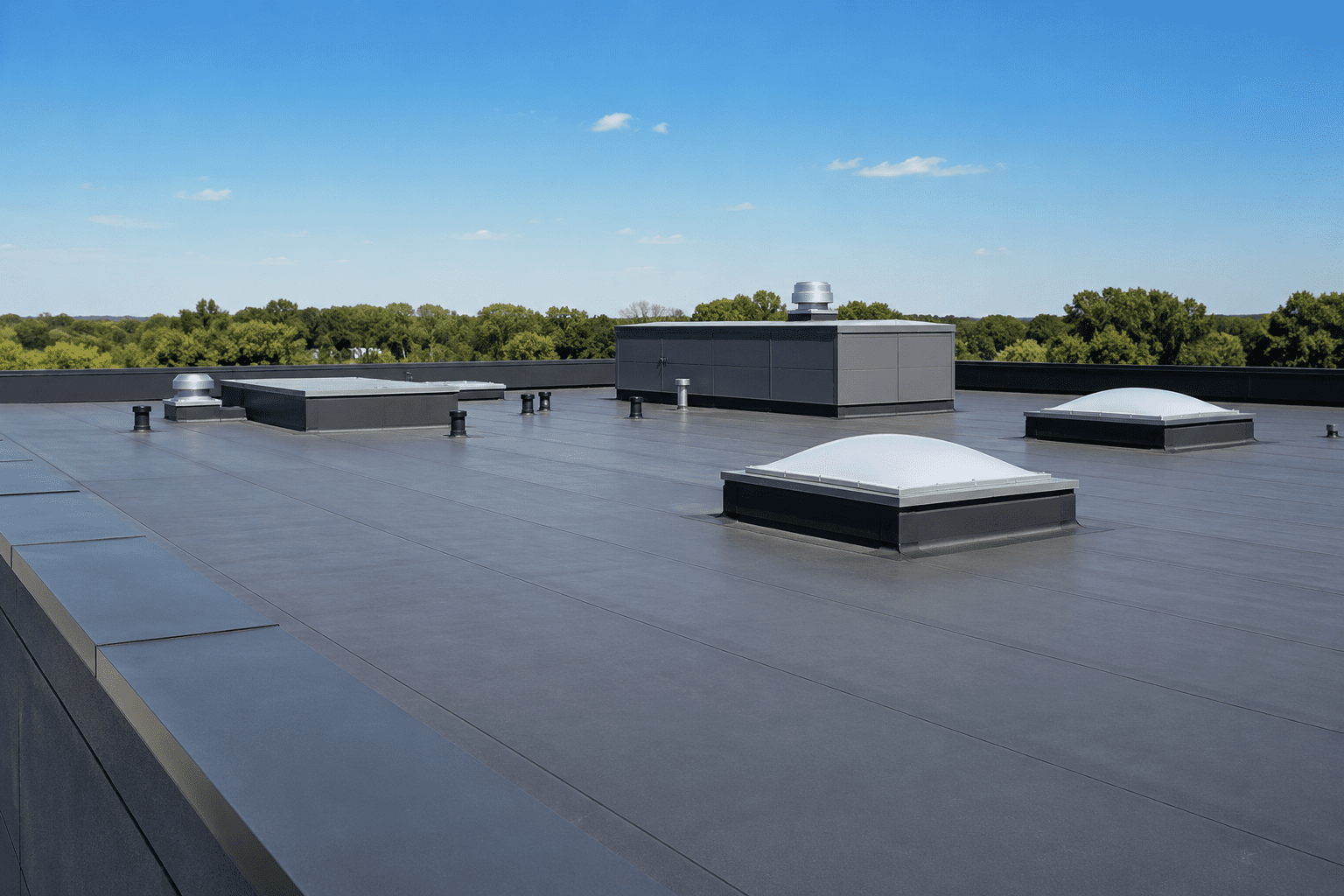
If you are a commercial property owner, you may be wondering, "How long does a flat roof last?" Most flat roofs last between 15 and 30 years, although some systems can exceed that lifespan with proper installation, maintenance, and favorable weather conditions. In Gwinnett County, GA, factors such as intense summer heat, heavy rainfall, humidity, and occasional severe storms can all influence how long a flat commercial roof remains in good condition. Understanding the expected lifespan of your roofing system and recognizing the warning signs of deterioration can help you plan ahead and avoid unexpected leaks or costly structural damage.
Flat roofs are commonly found on commercial buildings, apartment complexes, churches, warehouses, and modern residential properties throughout Gwinnett County. Their streamlined appearance and efficient use of space make them popular, but they require a different maintenance approach than traditional sloped roofs. Because water drains more slowly from a flat roof, small issues can develop into larger problems when left unaddressed.
Whether your roof is nearing the end of its expected lifespan or you're simply planning ahead, knowing what to watch for can help you make informed decisions about repairs and replacement.
The lifespan of a flat roof depends largely on the roofing material used, the quality of installation, and the environmental conditions it faces over time.
Built-up roofing, often called tar and gravel roofing, has been used for decades on commercial properties. This system consists of multiple layers of asphalt and reinforcing materials designed to create a durable waterproof barrier.
In most cases, a BUR roof lasts between 20 and 30 years. The layered construction provides excellent protection, but age and prolonged exposure to moisture can eventually cause deterioration.
Modified bitumen roofs are a common choice because they offer durability while remaining relatively affordable. These systems are designed to withstand temperature fluctuations and weather exposure.
Most modified bitumen roofs last between 15 and 25 years. Regular inspections and timely repairs can help maximize their lifespan.
EPDM is a synthetic rubber membrane that has become one of the most widely used flat roofing materials in the United States. It is valued for its flexibility and resistance to ultraviolet rays.
A properly installed EPDM roof often lasts 20 to 30 years. In Gwinnett County's hot summers, EPDM performs well because of its ability to handle thermal expansion and contraction.
TPO roofing has gained popularity due to its energy efficiency and reflective properties. Many commercial building owners choose TPO because it can help reduce cooling costs during Georgia's hot summer months.
A TPO roof typically lasts between 20 and 30 years when professionally installed and properly maintained.
PVC roofing is known for its strength and resistance to chemicals, punctures, and moisture. It is often used on restaurants, manufacturing facilities, and commercial properties.
Many PVC roofing systems last 20 to 35 years, making them one of the longest-lasting flat roofing options available today.
Learn about TPO vs EPDM vs PVC and which commercial roofing system is right for you here: TPO vs EPDM vs PVC: Which Commercial Roofing Membrane Is Right for Your Sugar Hill Business?
The material itself is only one factor in determining how long a flat roof will last. Several other elements play a significant role in overall performance.
Gwinnett County experiences a wide range of weather conditions throughout the year. Summer temperatures frequently climb into the upper 80s and 90s, while thunderstorms can produce heavy rainfall and strong winds.
Over time, these conditions contribute to:
Even high-quality roofing systems experience wear as they age under constant environmental stress.
A flat roof's lifespan often begins with proper installation. Poor workmanship can lead to premature failure, drainage problems, seam separation, and recurring leaks.
Professional installation helps ensure that roofing materials perform as intended and that drainage systems function properly from the start.
Routine maintenance remains one of the most effective ways to extend roof life.
Property owners who schedule regular inspections often identify minor issues before they become major repairs. Clearing debris, monitoring flashing, and addressing small leaks early can add years to a roof's service life.
Water management is particularly important for flat roofing systems. Unlike steep-slope roofs, flat roofs do not rapidly shed water during heavy rainstorms.
When drainage systems become clogged or damaged, roofing materials often age more quickly.
Every roof eventually reaches a point where repairs become less practical than replacement. Recognizing the warning signs early can help property owners avoid extensive interior damage.
A single leak does not necessarily indicate that a roof needs replacement. However, recurring roof leaks in multiple locations often suggest widespread deterioration.
Water intrusion can damage:
When leaks continue to appear despite repairs, the roofing system may be nearing the end of its useful life.
Flat roofs are designed to handle water, but standing water that remains for days after rainfall is a concern.
Persistent ponding can accelerate aging by placing additional stress on roofing materials and increasing the likelihood of leaks.
In Gwinnett County, where summer thunderstorms frequently bring heavy rainfall, proper drainage becomes especially important.
As flat roofing materials age, visible signs of wear often begin to appear.
Common indicators include:
These issues can compromise the roof's ability to keep water out and often signal that replacement should be evaluated.
Seams and flashing are among the most vulnerable areas of any flat roof.
Over time, exposure to heat, moisture, and movement can cause these components to loosen or separate. When multiple seams begin failing, repairs may become increasingly difficult and costly.
Older roofing systems often lose some of their insulating and reflective properties.
As a result, heating and cooling equipment may need to work harder to maintain comfortable indoor temperatures. Many property owners notice rising utility costs before they realize their roof is contributing to the problem.
Modern roofing systems often provide improved energy efficiency, helping reduce long-term operating expenses.
Even a roof that appears relatively sound may be approaching the end of its expected lifespan.
Once a roof reaches the 20- to 30-year range, deterioration often accelerates. Materials naturally weaken, repairs become more frequent, and the risk of unexpected failure increases.
If your roof is approaching its projected lifespan, a professional inspection can help determine whether replacement planning should begin before problems develop.
Property owners often wonder whether another repair will solve the problem or whether replacement is the better investment.
Several factors typically influence this decision:
While repairs can extend roof life in many situations, there comes a point where continuing to patch an aging system becomes less cost-effective than installing a new roof.
A proactive maintenance strategy can help maximize the lifespan of any flat roofing system.
Regular inspections, prompt repairs, debris removal, and proper drainage management all contribute to better long-term performance.
Scheduling professional roof evaluations at least twice per year can help identify concerns before they become major expenses. Many property owners in Gwinnett County also benefit from inspections following severe storms to assess potential damage that may not be immediately visible.
Flat roofs are designed to provide years of dependable protection, but no roofing system lasts forever. Understanding the expected lifespan of your roof and recognizing signs such as recurring leaks, ponding water, deteriorating membranes, and rising energy costs can help you make informed decisions about maintenance and replacement.
If your flat roof is showing signs of age or has reached the end of its expected lifespan, now is the time to schedule a professional inspection. An experienced roofing contractor from Adams & Sons Roofing can evaluate the condition of your roof, identify potential risks, and recommend the most cost-effective solution to protect your property for years to come.