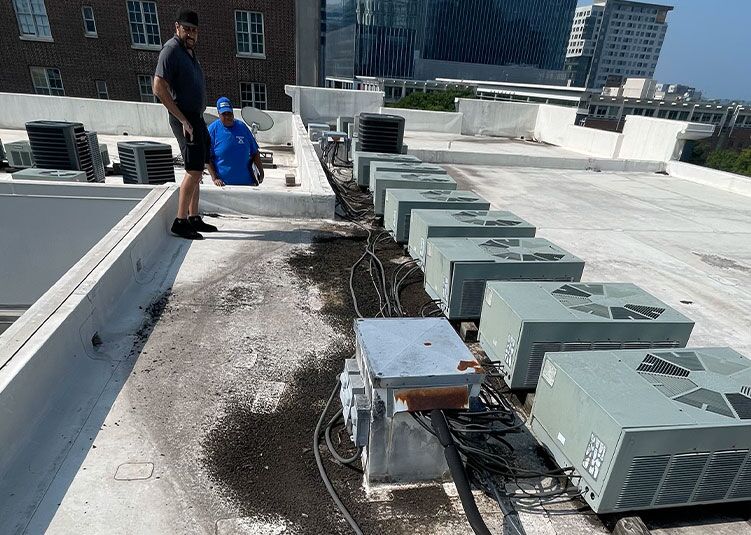
To extend commercial roof life, stay ahead of the problems that cause a roofing system to deteriorate early. Regular inspections, quick repairs, clear drainage, and checks after severe weather can prevent small defects from spreading into larger sections of the roof. For commercial properties in Sugar Hill, GA, this matters throughout the year as roofs deal with summer heat, heavy rain, thunderstorms, wind, and changing temperatures. Preventive maintenance will not stop a roof from aging, but it can help prevent avoidable damage from cutting its service life short.
Waiting until water appears inside the building often means waiting too long. A damaged seam, puncture, or loose section of flashing can allow moisture beneath the roofing material before anyone notices a ceiling stain. Once water reaches insulation or other parts of the roof assembly, a repair may become more involved.
Commercial roofing systems take a lot of abuse without getting much day-to-day attention. Heat, rain, wind, rooftop equipment, foot traffic, and debris all affect the roof over time.
The roofing material itself also makes a difference. TPO, EPDM, PVC, metal, modified bitumen, and other types of commercial roofing systems have different characteristics and maintenance needs. Adams & Sons Roofing provides commercial roofing services for these systems, including help with issues that develop as a roof ages.
A roof that looks fine from the parking lot can still have a developing problem. Commercial roofs have seams, flashing, drains, vents, curbs, edges, and equipment penetrations that cannot be properly evaluated from ground level. Sugar Hill properties may also collect leaves, pine needles, branches, and other debris. When that material gathers around drains or low areas, water may remain on the roof longer after a storm.
Preventive maintenance gives building owners a chance to find damage while it is still limited. A small membrane puncture is generally easier to address before water has had months to move beneath the surrounding roofing material.
Maintenance needs vary depending on roof age, material, condition, previous repairs, warranty requirements, and how the building is used. Knowing the expected lifespan of a commercial roof can provide useful context when deciding how aggressively to maintain an aging system.
An older roof is not automatically a candidate for replacement. Its current condition matters more than age alone.
Routine inspections make it easier to catch changes before they turn into obvious interior problems. A professional roof inspection can also provide a clearer picture of areas that cannot be evaluated from inside the building or from ground level.
An inspection may include checking:
There is no benefit in discovering a preventable problem six months after it started. Building owners who are unsure about inspection timing can also review how often a roof should be inspected and account for the age and condition of their particular roofing system.
A commercial roof does not have to be pouring water for something to be wrong. A separated seam or damaged flashing may initially allow only a small amount of moisture beneath the roof. That moisture can spread and affect insulation without producing an obvious leak inside the building.
Punctures, loose components, damaged flashing, and deterioration around penetrations deserve the same attention. When leaks do appear, identifying the source is important because water does not always enter the building directly above the visible stain.
Understanding how commercial roof leaks are repaired can help property owners see why simply covering a suspicious area with sealant is not always enough. When damage calls for professional attention, a commercial roof repair can address the affected area before the problem has more time to spread.
Water needs somewhere to go after a North Georgia downpour. On a low-slope commercial roof, that makes drains, gutters, scuppers, and downspouts particularly important.
Leaves, pine needles, dirt, branches, and other debris can slow or block drainage. A clogged drain may leave water sitting on an otherwise functional roof.
During maintenance, check for:
Keeping these areas clear is a relatively simple task that can prevent unnecessary stress on the roof.
A puddle immediately after a storm is different from water that remains on the roof well after the rain has stopped. Recurring ponding may point to a blocked drain, a low area in the roof, drainage design issues, or changes to the structure.
Building owners dealing with this problem can read more about ponding water on flat roofs in Sugar Hill and why finding the cause matters.
Do not repeatedly remove the water without investigating why it keeps returning. If the same section stays wet after every heavy rain, that area deserves a closer look.
The roofing crew is not necessarily the only group walking across a commercial roof. HVAC technicians, electricians, plumbers, and other contractors may need regular access to rooftop equipment. Every visit introduces another opportunity for accidental damage.
A dropped tool can puncture certain membranes. Screws or pieces of metal left behind can cause damage when stepped on. Workers may also wear down the same path if they regularly walk between an access point and rooftop equipment. Where appropriate, designated walkways can help protect heavily traveled areas.
It is also smart to look over the roof after major equipment work. New HVAC units, pipes, vents, or other installations can create new penetrations or change existing roof details.
Many roof leaks begin at transition points rather than in the middle of an undisturbed section of roofing.
Flashing protects roof edges and transitions. Seams join sections of certain roofing membranes. Curbs and penetrations accommodate equipment, vents, and pipes. Each of these areas has to keep water out while dealing with weather and normal building movement.
During an inspection, watch for:
Single-ply roofs deserve particular attention at seams and penetrations. Property owners comparing these systems can learn more about TPO, EPDM, and PVC roofing and how their materials differ.
Avoid treating every opening with another layer of sealant. A repair should address why the area failed rather than simply covering what is visible.
Leaves and branches are easy to ignore when they are sitting on a roof nobody sees. They become more important when they collect around drainage areas or hold moisture against roofing materials. Windblown debris can also scrape or puncture some roof surfaces. Properties surrounded by mature trees may need additional checks during fall or following storms.
Cleaning methods matter as well. Commercial roofing materials should not automatically be pressure washed or scrubbed aggressively. The cleaning method should match the roofing system. For low-slope properties, many of the same principles covered in these flat roof maintenance tips for Sugar Hill apply, particularly keeping the surface clear and paying attention to drainage.
A maintenance calendar cannot account for every thunderstorm that moves through Gwinnett County.
Heavy rain, strong wind, falling branches, and hail can cause problems between scheduled inspections. A quick check after significant weather can reveal a change before the next storm arrives.
Inside the building, look for new:
Outside, watch for loose materials, damaged gutters, fallen branches, and other visible changes.
If hail has moved through the area, roof hail damage is not always obvious from ground level. After particularly rough weather, a storm damage roof inspection and repair can help identify damage that warrants attention.
Not every aging commercial roof needs to go straight from repairs to replacement. Depending on the roof's material and condition, a coating may be an option worth evaluating.
Commercial roof coatings create a protective layer over an existing roof system. However, coatings are not a fix for every aging or leaking roof. Existing damage and moisture problems need to be identified before deciding whether a coating makes sense.
The roof should be evaluated based on what is actually happening beneath and across the surface rather than assuming a coating can cover every problem.
A roof's history becomes increasingly useful as the system gets older. Keep inspection reports, repair invoices, photos, warranty information, and original installation documents when available. Record major storms and significant work performed around rooftop equipment as well.
Over time, the file can reveal patterns. One isolated leak may not mean much. Repeated repairs in the same section are different. If repair calls are becoming more frequent, reviewing past work can help determine whether continued maintenance remains the sensible choice.
Costs matter here too. Property owners budgeting for aging roofs can compare recurring maintenance needs with typical factors affecting commercial roof repair costs.
Preventive maintenance can help preserve a roof that still has useful service life. It cannot reverse widespread deterioration or repair an entire roofing system indefinitely.
Age is only one part of the decision. The amount of trapped moisture, frequency of leaks, condition of insulation, repair history, membrane condition, and extent of damaged areas all matter.
If problems are becoming widespread, look for the signs that a commercial roof may need replacement rather than continuing to pay for temporary repairs. When replacement becomes the more practical option, a full commercial roof replacement provides an opportunity to address an aging system rather than continuing to repair recurring trouble spots.
Regular maintenance makes that decision easier. Instead of finding out that the roof is failing after a major leak, owners have inspection records and repair history showing how its condition has changed.
Commercial roof maintenance does not need to be complicated. Keep water moving off the roof, remove debris, repair damaged areas promptly, control unnecessary foot traffic, and pay attention after severe weather.
The key is consistency. A roof that is checked only when water enters the building has already been given plenty of time to develop hidden problems.
For Sugar Hill property owners, routine care can reduce avoidable damage while making it easier to budget for repairs and eventually plan for replacement on your own timeline.
If your Sugar Hill, GA, commercial property has standing water, recurring leaks, aging roofing materials, or has gone too long without an inspection, contact Adams & Sons Roofing to schedule an inspection and find out what needs attention now and what can be monitored for the future.