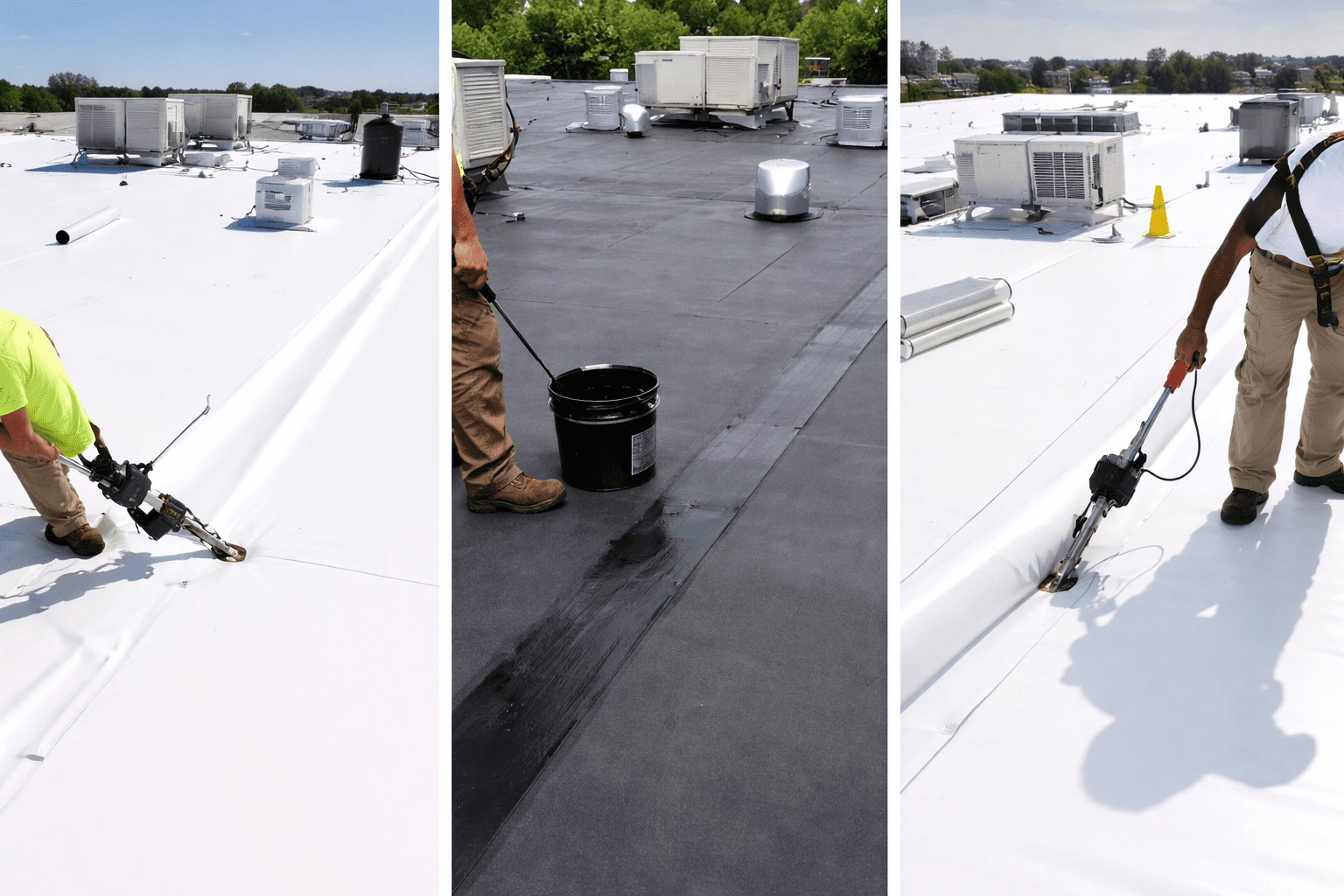
If you are comparing TPO vs EPDM vs PVC for your commercial roof in Sugar Hill, GA, you are already asking the right questions. Choosing the correct single-ply membrane is one of the most consequential decisions a commercial property owner or building manager in Gwinnett County can make. Get it right and you have decades of reliable protection. Get it wrong and you are dealing with premature failures, rising energy bills, and costly repairs.
Georgia's climate adds its own layer of complexity to this decision. Sugar Hill and the surrounding Gwinnett County area face long, hot summers with intense UV exposure, high humidity, heavy thunderstorms, and the occasional hailstorm. Not every commercial roofing membrane handles those conditions equally. This guide breaks down how each of the three most popular single-ply systems performs so you can make a confident, informed choice for your commercial building.
Single-ply membranes are large sheets of synthetic roofing material used to waterproof and protect flat and low-slope commercial roofs. They are manufactured in wide rolls and installed in a single layer, making them lighter and faster to install than multi-layer systems like built-up roofing (BUR) or modified bitumen.
The three most widely used single-ply options in commercial roofing today are thermoplastic polyolefin (TPO), ethylene propylene diene monomer (EPDM), and polyvinyl chloride (PVC). Each has a unique composition, installation method, and performance profile that makes it better suited to certain building types, uses, and climates.
Learn more about the common types of commercial roofing systems here: Types of Commercial Roofing Systems Explained: Which One Is Right for Your Property?
TPO roofing has become one of the most popular commercial roofing membranes in the country over the past two decades, and it is easy to understand why in a climate like Gwinnett County's. Its white reflective surface bounces UV rays away from the building rather than absorbing heat, which directly reduces cooling costs during the long Georgia summer.
TPO is a thermoplastic membrane, meaning its seams are heat-welded together to create a strong, watertight bond that performs well under heavy rain and storm conditions common to North Georgia.
TPO formulations have improved significantly over the years, but quality still varies between manufacturers. Partnering with an experienced commercial roofing contractor who sources proven materials is essential to getting the full expected lifespan from a TPO system.
EPDM roofing is a synthetic rubber membrane that has been trusted in commercial roofing for over five decades. That long track record gives property owners in Sugar Hill real confidence in its durability, especially for buildings that need reliable, low-maintenance protection year after year.
EPDM performs exceptionally well in climates that experience wide temperature swings. While Gwinnett County summers are hot, the area does see cold winters, and EPDM handles those thermal cycles well without cracking or delaminating.
Standard EPDM is black, which means it absorbs heat rather than reflecting it. In Georgia's hot summers, that can translate to higher cooling costs compared to white membrane alternatives. White EPDM is available, though it comes at a higher price point. EPDM seams are bonded with adhesive or tape rather than heat-welded, which means seam quality depends heavily on proper installation technique and periodic inspection.
PVC roofing membranes have been used successfully in commercial applications for over 40 years, particularly in buildings that require superior chemical and fire resistance. For the right application, PVC consistently delivers the strongest return on investment of the three single-ply options.
Like TPO, PVC features a reflective white surface that helps manage Georgia's summer heat, along with heat-welded seams that create some of the most durable watertight bonds in the single-ply category.
PVC is typically the highest-cost single-ply option. In extreme cold, PVC can become less flexible over time, though this is a limited concern in the Sugar Hill area given the region's relatively mild winters. For buildings with specific chemical exposure requirements or strict fire code mandates, the added cost of PVC is usually well justified by its specialized performance.
The right membrane depends on several factors specific to your property and budget. Here is a practical framework for thinking through the decision.
Budget considerations: EPDM is typically the most affordable upfront, making it a practical choice for property owners prioritizing initial cost. TPO offers a strong middle-ground balance of performance and price. PVC commands a premium but delivers specialized advantages for the right building type.
Learn how much different commercial roof types cost here: How Much Does a Commercial Roof Cost? Understanding Material and Installation Price Differences
Georgia's climate: Sugar Hill's long, hot summers make the reflective surfaces of TPO and PVC particularly valuable for energy savings. If your building faces wide seasonal temperature swings, EPDM's flexibility and proven performance through thermal cycling make it a reliable choice.
Building use: Properties that generate grease, oils, or chemical exposure, such as restaurants, commercial kitchens, or light industrial facilities, benefit most from PVC's chemical resistance. Standard commercial buildings like offices, retail centers, strip malls, and warehouses typically perform very well with TPO or EPDM.
Long-term goals: All three systems can deliver 20 to 30 or more years of performance when properly installed and maintained. Regardless of which membrane you choose, routine inspections, prompt commercial roof repairs after storm events, and preventive maintenance are critical to getting the most out of your investment.
Selecting the right single-ply membrane for your Sugar Hill commercial property is a decision that affects your building's protection, energy performance, and maintenance costs for decades to come. Working with an experienced local contractor who understands North Georgia's specific weather challenges makes all the difference.
Adams & Sons Roofing has been serving commercial property owners in Sugar Hill, Gwinnett County, and the greater Atlanta area since 1987. With 40+ years of experience, GAF certification, an A+ BBB rating, and GARCA membership, our team provides honest, educational guidance to help you choose the commercial roofing system that delivers the best long-term value for your property.
Contact us today to schedule your free commercial roofing estimate. We will assess your roof's condition, walk you through your membrane options, and help you make the most informed decision for your building and budget.