Choosing the right roofing system for your commercial property is one of the most important decisions you'll make as a building owner. Understanding the various types of commercial roofing systems available helps you select an option that balances durability, energy efficiency, maintenance requirements, and budget. Commercial roofing differs significantly from residential homes in its design, materials, and installation methods. This guide breaks down the most common commercial roofing options to help property owners and business owners make an informed decision for their specific needs.
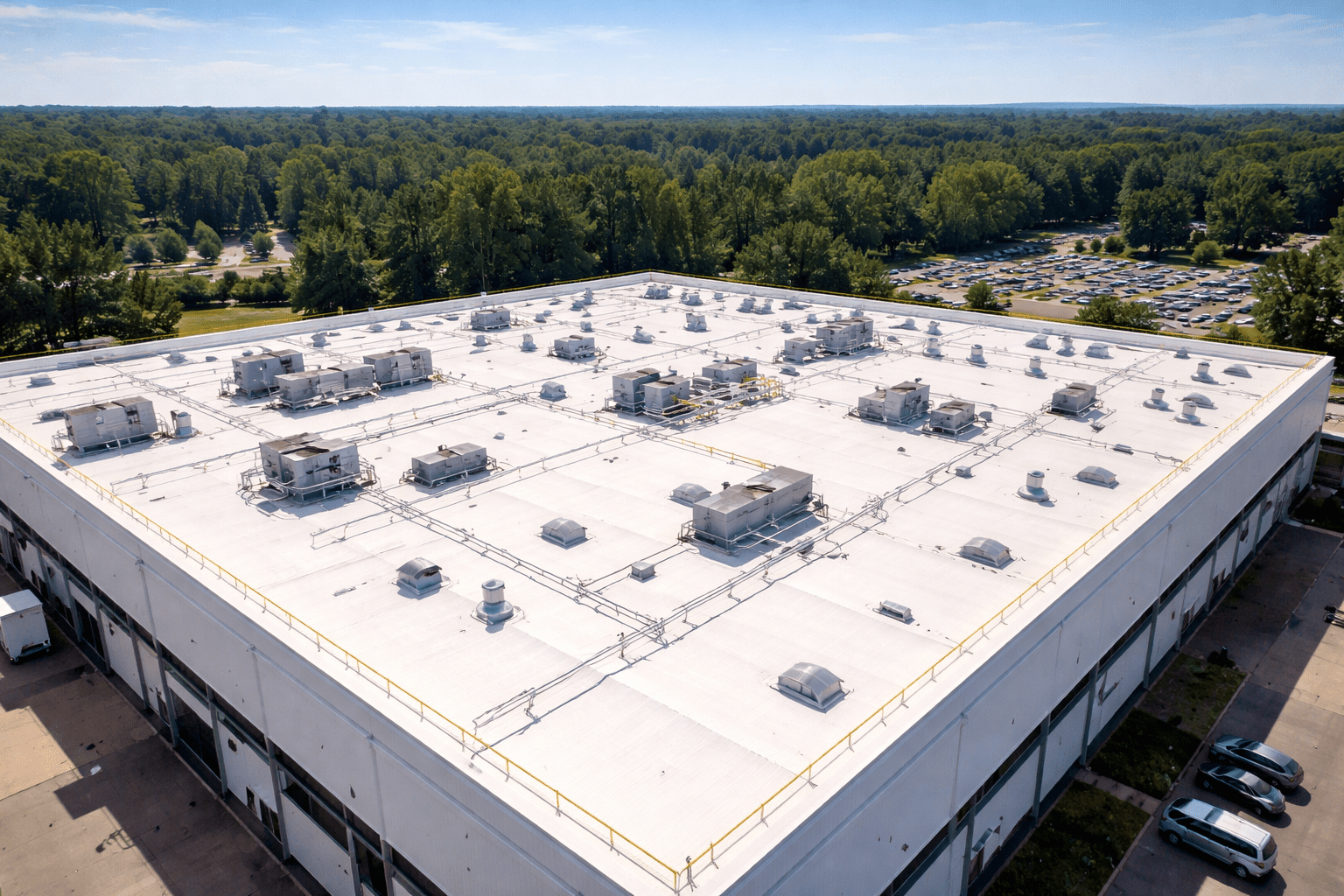
Commercial properties typically feature flat roofs or low-slope roofs rather than the steep slope roofs common on residential structures. These low slope roofs require different materials and installation techniques to ensure proper water drainage and prevent leaking. Commercial buildings often support heavy equipment like HVAC units and may need to withstand foot traffic from maintenance personnel. The right system must accommodate these demands while providing long-lasting protection against harsh weather conditions common in Georgia, including heavy rainfall, strong winds, and intense sun exposure.
Learn about popular commercial roofing types in our "Trends in Commercial Roofing in Atlanta: Innovations Reshaping Skylines" blog.
Built-up roofing has served commercial structures for over a century, earning its reputation as a time-tested solution for flat commercial roofs.
How BUR Systems Work
Built-up roofs consist of multiple layers of tar and roofing felt, creating a thick protective layer that provides excellent waterproofing. These bitumen roofing systems alternate between layers of asphalt or coal tar and reinforcing fabrics, then finish with a top layer of gravel or a reflective coating.
Key Benefits:
Built-up roofing performs well in hot climates and provides reliable protection for industrial buildings. The multiple layers create redundancy, meaning one small puncture won't immediately compromise your entire roof. However, BUR systems are heavier than modern alternatives and require more labor-intensive installation.
Single-ply roofing membranes have become a popular choice for commercial roof types over the past several decades. These systems use one layer of synthetic material to create a watertight barrier.
TPO roofing has emerged as one of the most popular options in the commercial roofing industry. This thermoplastic roof membrane offers a white reflective surface that significantly reduces energy costs by deflecting heat away from your building.
TPO Advantages:
EPDM roofs utilize synthetic rubber to create a durable, weather-resistant membrane. This black rubber roofing has protected commercial roofs for over 50 years.
EPDM Benefits:
PVC represents the premium option among single-ply membranes. This material offers superior chemical resistance and durability, making it ideal for restaurants or facilities that produce grease or oils.
Learn more about the differences between TPO, EPDM, and PVC in our "TPO vs EPDM vs PVC: Which Commercial Roofing Membrane Is Right for Your Sugar Hill Business?" blog.

Metal roofing isn't just for residential homes anymore. Standing seam metal roofs have gained popularity on commercial buildings due to their longevity and aesthetic appeal.
Metal Roof Advantages:
Metal roofs cost more upfront but deliver value through their extended lifespan and reduced maintenance needs. They're an excellent choice for new construction projects or complete commercial roof replacements.
Modified bitumen represents an evolution of traditional built-up roofing, combining BUR's reliability with modern polymer technology. These bitumen roofs typically consist of two to three layers and offer easier installation than traditional BUR systems.
Modified Bitumen Features:
Forward-thinking property owners increasingly consider environmental impact when selecting commercial roofing options.
Wondering more about the cost of commercial roofing? Learn more in our "How Much Does a Commercial Roof Cost? Understanding Material and Installation Price Differences" blog.
The decision-making process for selecting the best option among various types of commercial roofing systems depends on several factors:
Before you reach that stage, it's worth knowing the signs your commercial roof needs replacing - because catching deterioration early shapes which replacement path makes sense for your building. Each type of roofing system offers distinct advantages for different applications. Low-slope roofs on large warehouses have different requirements than multi-story office buildings or retail spaces. Understanding your specific needs helps narrow down commercial roofing types to those best suited for your situation.
Regular maintenance extends the lifespan of any commercial roof system, regardless of which variety of materials you choose. Proper care, including inspections, cleaning, and prompt repairs, protects your investment and prevents minor issues from becoming major problems.
Selecting from the different types of commercial roofing systems available requires careful consideration of your building's unique requirements and Georgia's weather challenges. Adams & Sons Roofing brings over 40 years of experience helping Gwinnett County business owners choose and install the right roofing system for their commercial properties. As GAF-certified contractors with an A+ BBB rating, we specialize in TPO membrane, modified bitumen, and built-up roofing installations.
Contact us today for a free estimate and expert consultation. We'll evaluate your building's structural integrity, discuss your long-term goals, and recommend the best types of commercial roofing materials for your specific property. Military personnel, first responders, and educators receive special discounts.